

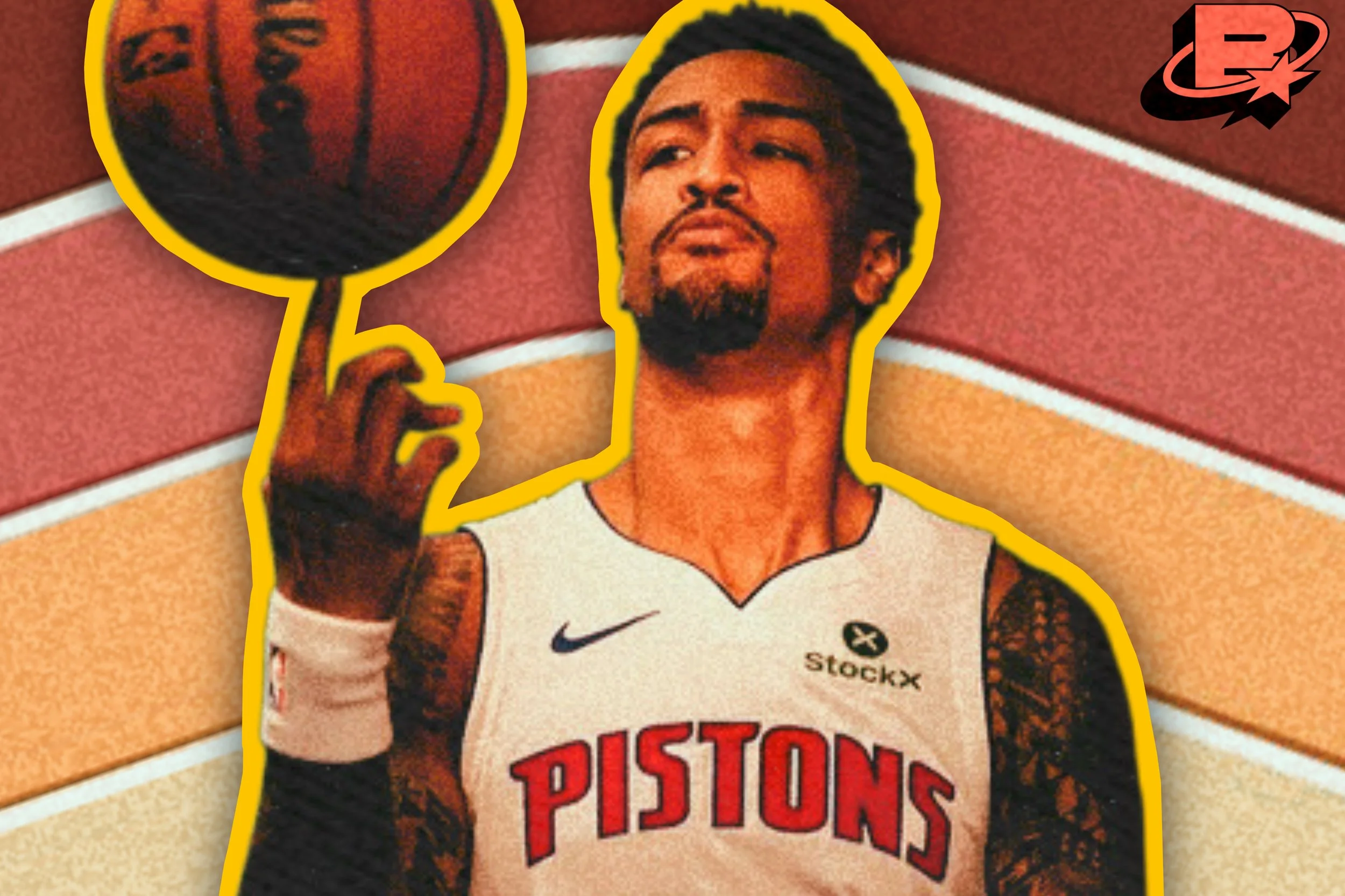
Image of John Collins via Getty Images
Sometimes it feels pointless to evaluate players so early in the season. Especially those who are new to the team and system and just trying to fit their way into the style of play demanded of them.
It is no secret John Collins has had a poor start to his stint in Detroit. In the first seven games of his tenth NBA season, Collins is averaging a career low in points and field goals attempted per game, all while shooting just 42% from the field with less than inspiring defense.
A lot of this can surely be attributed to a small sample size, and it is a safe bet to assume the water will level eventually, however, there are clear issues that need to be improved upon, by not only John Collins himself, but also the Detroit Pistons coaching staff.
The Defense Discussion
For Collins individually, his main issues start on the defensive side of the ball. To start this season, he has been a clear negative on this side of the floor. Flat footed in isolation, slow to rotations with below average defensive rebounding impact to top it off.
While there should be an assumed transition and grace period given to a new addition to such an established defensive culture, this is something to keep an eye on. His rim defence and weak side rim-protection have flashed, but there is not enough consistency overall, though I do not believe because of lack of effort. Collins has never been known as a great defender around the league prior to his arrival to Detroit, though he has always been a good rebounder throughout his career, we just have yet to see it in its entirety.
With the injury to Jalen Duren, there has been much more responsibility put on Collins shoulders than expected. His minutes at center have been less than impressive, as he doesn’t look comfortable guarding the PnR and doesn’t have enough rim deterrence to impact scorers at the rim.
While it is hard to put too much blame on Collins in this regard, it is not very inspiring for “small ball” lineups going forward.
Overall, the Eastern Conference is full of versatile forwards who can beat you from a multitude of spots on the floor. Collins will need to become serviceable guarding both in space and in the paint for the Pistons to become the team they aspire to be. Though, as we have seen over the past few seasons, if there is any coach to get the most out of a player possible defensively, it would be JB Bickerstaff.
Offensive Issues
On the offensive side of the ball is where I think Collins is most falling victim to small sample size syndrome, however, I do believe some of these struggles are to blame on the Pistons offensive coaching staff.
As mentioned earlier, Collins is averaging a career low in points per game (8.4) while shooting only 42% from the field. Despite shooting a respectable 35% on just under three attempts per game, Collins is shooting a career low 60.9% at the rim with an incredibly low 9% FTr, almost twenty percentage points lower than his career average. He is currently attempting just .7 FTA per game this season compared to his career average of 3 FTA per game (databallr.com).
While there is still plenty of individual improvement that can be made to better these numbers (higher 3Pr, increased physicality, better overall efficiency), I think it is fair to say his play offensively to this point is an unrealistic image of who John Collins has proven to be in the past. Expecting him to continue this level of play offensively would be unfair to the ten year sample he has given us before.
Again, there should be a grace period given to players joining new teams, systems and cultures. It can be difficult to navigate your way, and fit into, a system that is completely foreign to you. However, it is also on the coaches and staff to help assimilate the player into their offense as efficiently and to the best of their ability.
The Detroit Pistons offense hasn’t done enough to put John Collins in successful spots to be effective. So far this season, Collins is averaging a career low points in paint while shooting less 3PA per game since his 2023 season. He is also averaging a career high in on-ball percentage at 23%, which is more than double his previous career high (databallr.com).
Collins is a below average creator for himself AND for others outside of occasional post-up opportunities. He also has a weak handle and doesn’t create much separation going downhill as he often gets bumped off his spots on drives. His playmaking is quite limited to simple reads in stationary situations.
For a player who has notoriously been slotted as a play finisher across the association, these are indicators of poor coaching/execution. I am sure some can be blamed on Collins forcing in situations, but ultimately it is on the coaching staff to put him in comfortable/familiar positions and let the efficiency figure itself out.
As the year continues, and especially once postseason play comes around, Collins will need to be an imperative piece in the team's success. The Pistons offense has overall become a more diverse, efficient system, incorporating much more player and ball movement than we have seen in recent years, but Collins’ struggles still show there is room for growth.
A measly seven game sample out of an eighty two game season is hard to put much stock into, and while the defensive issues may be an ongoing conversation all year, going forward it should be an emphasis for John Collins and the Detroit Pistons staff to get better acquainted.
And the sooner, the better.